
From Skin-to-Skin Contact to a Hug: Why Closeness Matters So Much to Children
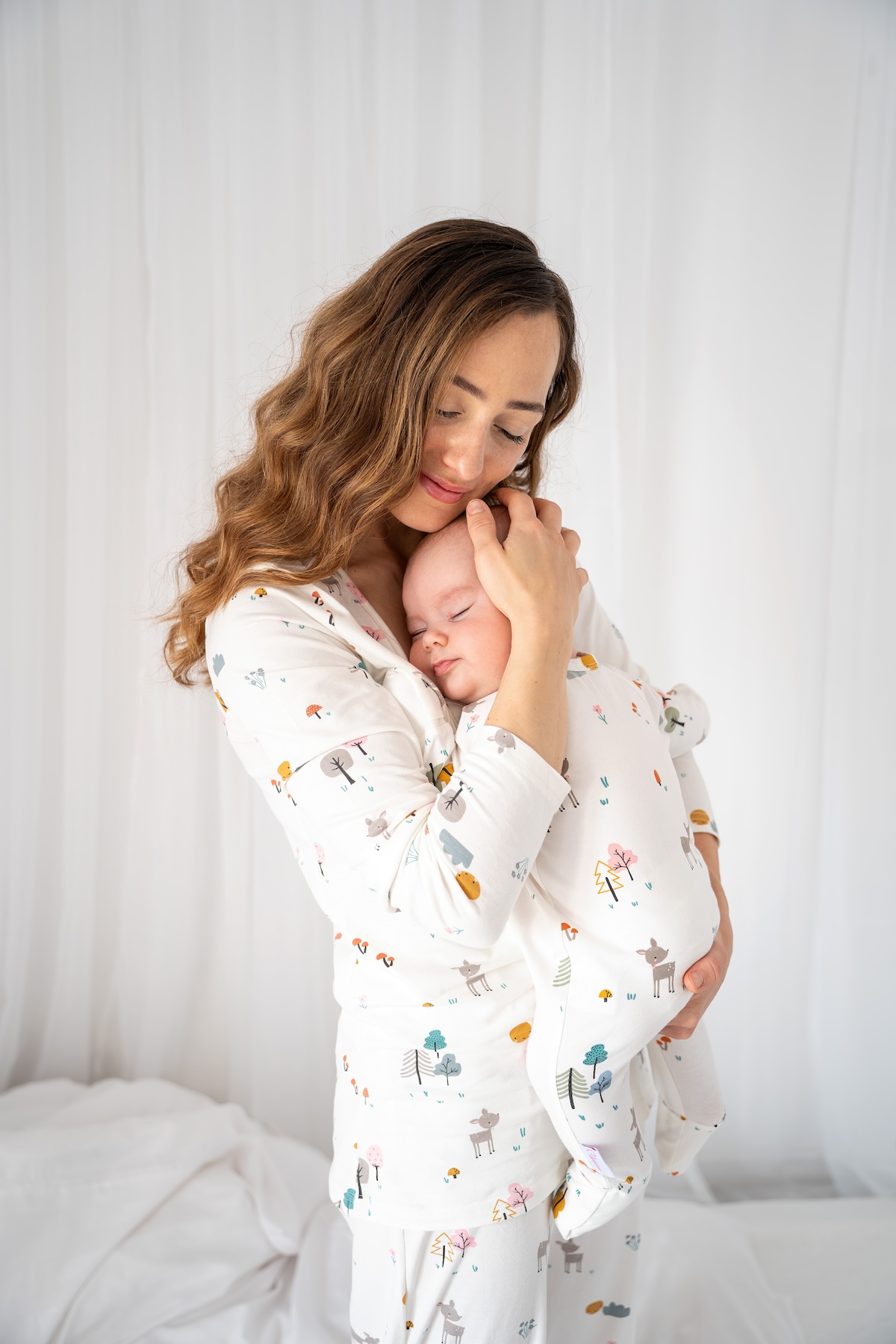
When a baby is born, one of the first things they need is not clothing, a toy or a perfectly prepared nursery. It is closeness.
Placing a newborn on their mother’s bare chest is more than a beautiful moment after birth. Skin-to-skin contact is part of recommended newborn care, and its benefits are supported by research.
As a child grows, the form of that contact changes. The need to feel close to a parent does not end after the first hour of life.
What exactly is skin-to-skin contact?
Skin-to-skin means direct contact between a baby’s skin and a parent’s skin. The baby is placed chest-down on the parent’s bare chest, while their back stays covered and warm.
The World Health Organization (WHO) recommends skin-to-skin contact during the first hour after birth for healthy newborns. It helps prevent the baby from getting cold and supports the early start of breastfeeding. Under its Early Essential Newborn Care programme, WHO recommends prolonged skin-to-skin contact lasting at least 90 minutes after birth.
This is a recommended part of care, not simply a modern trend or a lovely photograph from the maternity ward.
What does the research say about skin-to-skin contact?
The latest Cochrane review suggests that early skin-to-skin contact probably helps newborns adjust to life outside the womb, particularly by helping them maintain their body temperature and increasing their blood glucose levels. It may also benefit breathing and heart rate, although the evidence for these outcomes is less certain.
Breastfeeding
According to Cochrane, mothers who have skin-to-skin contact with their babies during the first hour after birth are probably more likely to breastfeed exclusively. This applies not only shortly after birth but also at follow-up between six weeks and six months.
The stress response
A systematic review of 22 studies describes associations between skin-to-skin contact and measures of stress regulation in both parents and babies. These measures include heart rate variability, autonomic nervous system activity, and cortisol and oxytocin levels. However, the findings come from different groups and settings. They cannot be reduced to a claim that skin-to-skin contact will “solve” every crying baby’s distress.
Sometimes a crying baby simply needs to feel a parent close by
Every parent knows the moment when their baby has been fed and changed but is still unsettled.
Crying can have many causes. If it is unusual or the baby cannot be comforted, it is important to consider a possible health problem. Sometimes, though, a baby is seeking closeness: a parent’s warmth, familiar scent and voice, gentle touch and reassuring arms.
Skin-to-skin contact does not have to be seen as something that happens only once, in the maternity ward. At home, while a baby is still small, it can be one everyday way to help them feel close to a parent.
Skin-to-skin contact without complicated undressing
This everyday experience with babies inspired one of the ideas behind Magneticlove clothing.
Imagine a familiar situation: a baby is unsettled, and their mother wants to hold them directly against her chest. With conventional clothing, that may involve undoing buttons, undressing both mother and baby, and then dressing them again afterwards.
Magnetic fastenings can make the process simpler. The mother opens the front of her pyjamas, then opens the magnetic fastening on the baby’s romper to expose part of the baby’s chest. She can hold the baby directly against her skin while both remain mostly dressed. When their time together is over, she simply closes the fastenings.
Click, and it is done — without fully undressing and dressing the baby again.
Magnetic fastenings have no medical effect in themselves, and we do not claim that clothing can soothe a crying baby. Their purpose is simply to make it easier for a parent to reach their baby when they want to be close.
Kangaroo Mother Care: when skin-to-skin contact is part of treatment
The evidence is particularly strong for babies born prematurely or with a low birth weight. In this context, we talk about Kangaroo Mother Care (KMC), which combines prolonged skin-to-skin contact with feeding breast milk.
Current WHO recommendations say that KMC for preterm and low-birth-weight babies should begin as soon as possible after birth and continue for 8 to 24 hours a day — for as many hours as possible. It can continue at home after discharge from hospital.
The results are striking: an analysis of KMC started immediately for small and preterm babies found approximately 25% lower all-cause mortality, an 18% lower risk of suspected sepsis and 36% lower sepsis-related mortality.
These figures apply specifically to preterm or low-birth-weight babies. It would be incorrect to suggest that the same effects occur in healthy babies born at term.
And then the baby grows up…
Over time, we no longer place a child against a bare chest in the same way we do a newborn. But something of that closeness remains.
A child falls and cries — and runs to us. Something frightens them — and they want to be picked up. They are ill — and want to cuddle. They have had a difficult day — and need a hug.
With older children, we no longer call this skin-to-skin contact. It is touch, hugging, cuddling and physical closeness with a parent. It is important to keep the science clear: findings from studies of newborn skin-to-skin contact cannot automatically be applied to hugging a three-year-old.
The underlying idea is simple: as children grow, the way they seek closeness changes, but their need for it does not disappear.
Closeness does not have to be complicated
Perhaps that is why, when we design children’s clothing, we think about more than how it looks. We think about what happens while a child is wearing it: nappy changes in the middle of the night, feeding, crying, falling asleep in someone’s arms, skin-to-skin contact — and, later, thousands of ordinary hugs.
Magnetic fastenings do not create the bond between a parent and child. But they can do one small thing: make it easier to be close when clothing might otherwise get in the way. Sometimes, a small detail can make a real difference in everyday parenting.
Staying safe during skin-to-skin contact
During skin-to-skin contact, the baby’s airway must remain clear and their face visible. The parent must be awake and able to hold and monitor the baby safely. Skin-to-skin contact does not replace a safe place for the baby to sleep.
If you have any concerns about your baby’s health, or their crying is unusual or inconsolable, contact a paediatrician or another healthcare professional.
This article is for information only and does not replace professional medical advice.
Frequently asked questions
How long should skin-to-skin contact last after birth? WHO recommends at least the first hour after birth for healthy newborns. Under its Early Essential Newborn Care programme, it recommends at least 90 minutes.
Does skin-to-skin contact help outside the maternity ward? Direct research evidence mainly concerns the period immediately after birth and the care of preterm babies through Kangaroo Mother Care. Close physical contact remains a natural part of comforting a baby in the following months.
What is Kangaroo Mother Care (KMC)? It is a method of caring for preterm or low-birth-weight babies that combines prolonged skin-to-skin contact — recommended for 8 to 24 hours a day — with feeding breast milk.
Sources
- World Health Organization — Early Essential Newborn Care
- World Health Organization — Kangaroo Mother Care: A Clinical Practice Guide, 2025
- Cochrane — What is known about the benefits of immediate or early skin-to-skin contact for mothers and babies?
- World Health Organization — Immediate Kangaroo Mother Care and prevention of sepsis